Talking Salmon
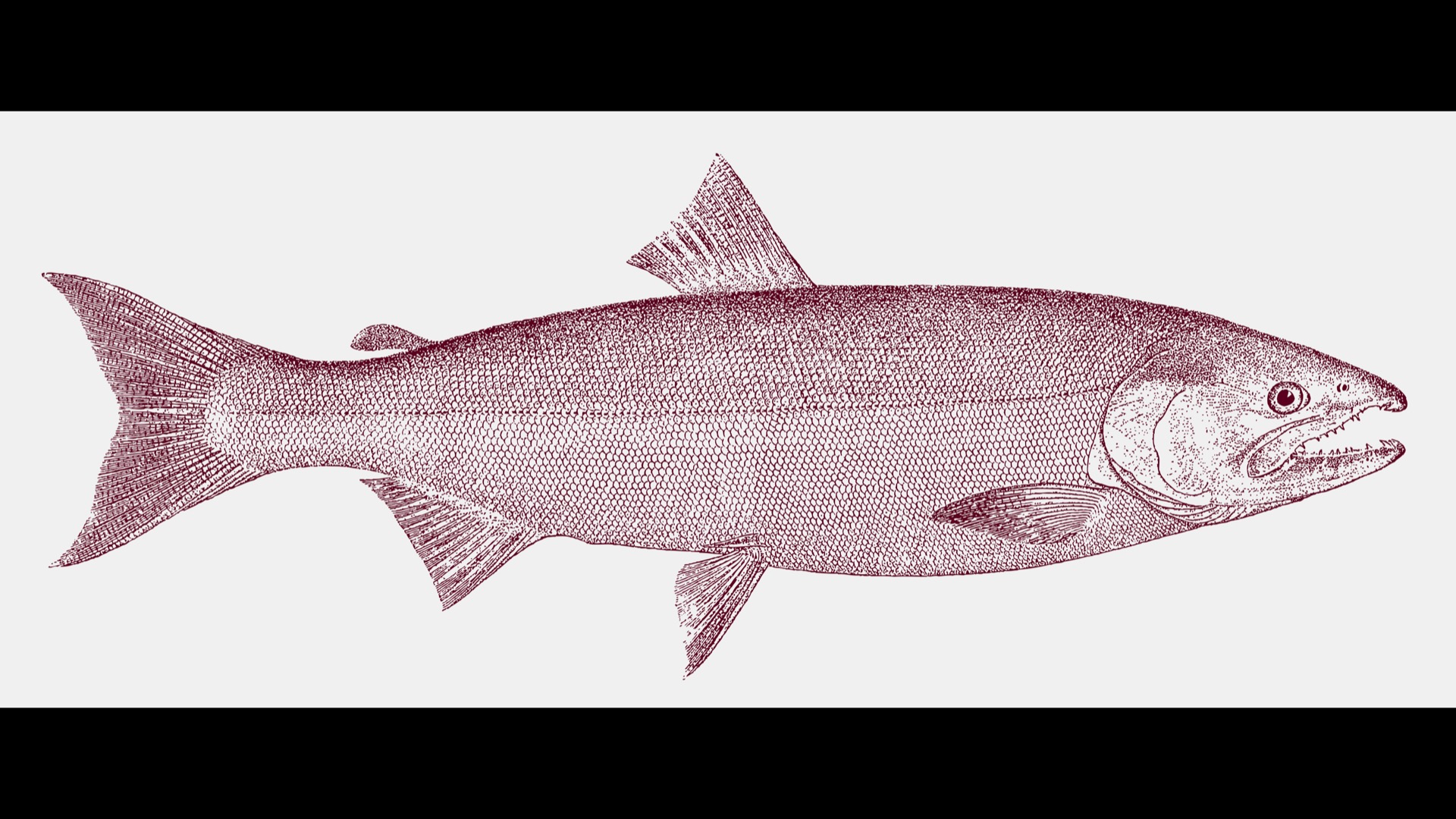
The interdisciplinary project Talking Salmon is dedicated to the question of how salmon-like fish can be staged and understood as cultural and ecological mediators between humans and nature. These animals, which have been part of indigenous, regional and ecological narratives for centuries, connect habitats such as oceans, rivers and forests. In times of ecological crises and increasing alienation from the natural world, they are to become narrative figures that open up new perspectives on our relationship with the environment.
Course of the project
At the centre of the project is media-ethnographically oriented field research at various geographical and cultural locations - including Haida Gwaii (Canada), the Modau (Germany), Graz (Austria), Moen (Denmark), the Teno River in the Sapmi region and a salmon farm in Norway. Local narratives, rituals, art forms and knowledge practices relating to salmonid fish are documented and analysed on site. A special focus is placed on indigenous perspectives that do not distinguish between "nature" and "culture", but think of both as part of a coherent whole.
The collected materials (interviews, observations, audiovisual recordings) flow into multimedia productions: Films, essays, literary texts, art projects and installations that are intended to be received in both academic and public spaces. Reflection on formats and narrative techniques is an integral part of the project: it examines how different media affect our perception of ecological relationships and how narrative design can create new approaches to the human-nature connection.
Aim of the project
Talking Salmon aims to use cross-genre and cross-media stories about salmon-like fish to break down the separation between humans and nature and establish new ecological narratives. The narrative figures from the water serve as a medium for transcultural and transdisciplinary communication processes in the Anthropocene. In the long term, the project aims to visualise new perspectives on the relationship between humans, animals and the environment and thus provide impulses for a different understanding of living and working together.
Research questions
To what extent can migratory salmon-like fish, which have represented a natural link between sea, river and forest worldwide for thousands of years, be used to tell cross-genre and cross-media stories of success that transcend the human-nature boundary and initiate a new "great conversation" between living beings?